
Maddie Zahm -- Everything All the Time
Arend Lee Jessurun reviews Everything All the Time -- the stunning new queer exvangelical album from Maddie Zahm, which teaches us that living is an art, not a dogma.
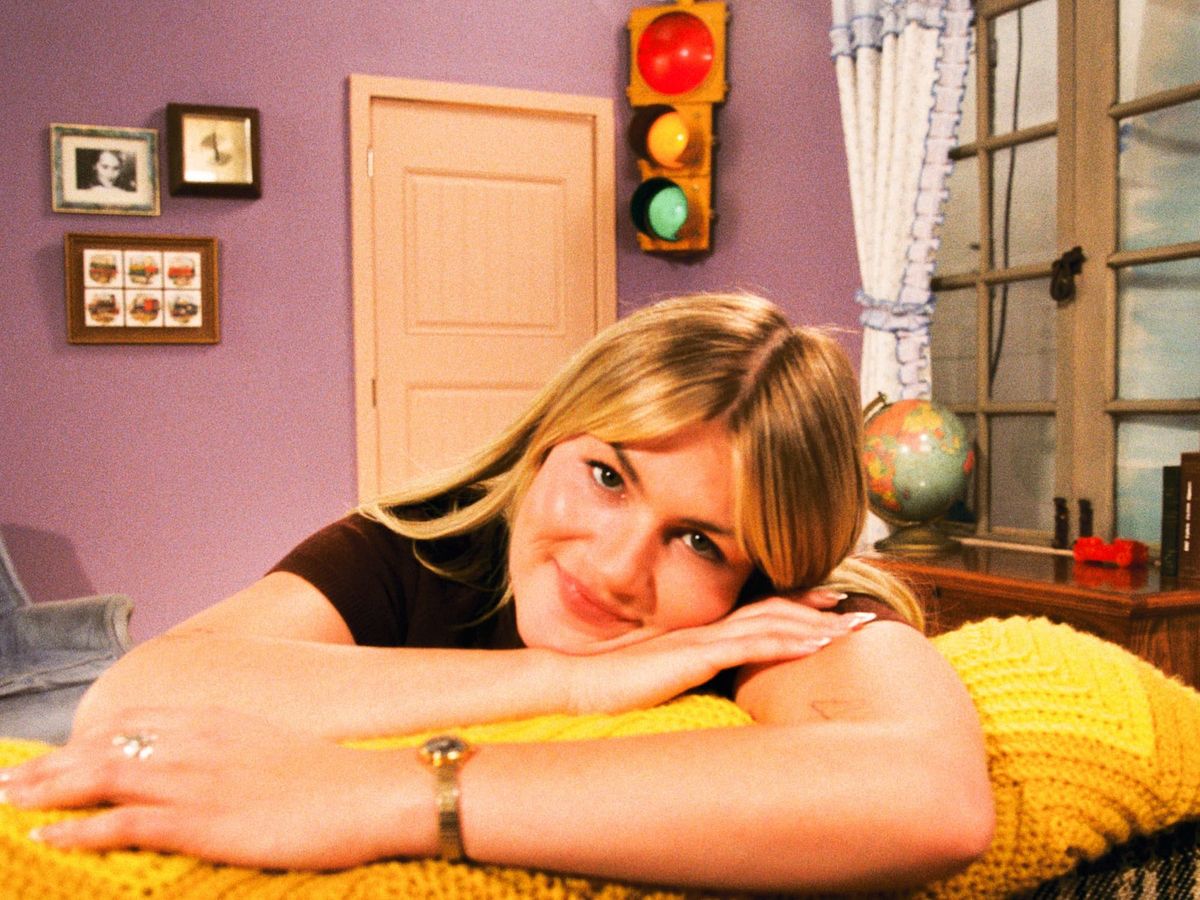
Maddie Zahm's sophomore album Everything All The Time continues to explore themes of identity and sexuality, tapping deeper into self-realization, personal growth, and big emotions, with the latter being the vehicle for it all. The album offers a diverse range of classic-songbook-inspired ballads, '70s West-Coast folk rock, anthemic pop country, atmospheric indie folk, and even a little '00s-hoedown-throwback-dance-country moment. Maddie Zahm gives us not just her characteristic belting highs but also some impressive, bellowing alto and gentle plain-spoken lyricism that makes her, in my opinion, one of the most unique new singing voices in folk-pop.
If the title track's intro piano reminds you at all of Mister Rogers' Neighborhood, that is intentional. This childhood TV show became very influential to Zahm, who continues to take to heart Fred Rogers' lessons of self-acceptance and emotional intelligence. "Why do I feel everything all the time?" she asks. "Is everyone's heart breaking, or is it just mine?" It builds into this huge, theatrical big-band tune, with strings, horns, tempo changes, and a final choral, singalong breakdown. The intro piano melody returns and ends on this delicate, yet unresolved, borrowed chord, as if to end on a question mark. What a way to kick off an album.
Now when it comes to vices, some might say a drunk cigarette "doesn't count"—it's not serious, not a problem. Not so for one who feels everything. Zahm's "Drunk Cigarette" is about emotional sobriety as much as it is about substances, if not more. The drunk cigarette in question is a love-interest, "a bad idea walking home from the bar," something you might indulge in though you know it's not good for you. It's an elaborate, well-crafted extended metaphor à la pop. The production is a hazy night out, such an autumn vibe, reminiscent of college days and ill-fated college romance.
"Grave" is a stunner of Nashville-style lyricism. It's the story of a will-they-won't-they relationship. Zahm croons, "Are we just two cowards waiting on the other one to say / I love you? / I love you, / and I'll take it to my grave." Of course, the usual meaning of the saying "take it to my grave" is a close-guarded, never-admitted secret. But I first took it to mean a "till death do us part" kind of taking-to-one's-grave. The ambiguity of this line really sells the story. And "Georgia Girl" has the makings of a classic love song. Our Idaho-raised singer-songwriter masterfully plays on the trope of the place-song, penning, "Georgia girl, you're making LA feel like home. ... Georgia girl, you got a thing for Idaho." Also, is it "Georgia girl" or "Georgia, girl"? Is she from Georgia or named Georgia? Either way, I think this is gonna end up on a lot of second-date love song playlists.
The song that hit me hardest was "Graffiti." As someone who also grew up in evangelical Christianity, it's hard not to hear "I'm so dirty, covered completely in graffiti" as an expression of the harm of purity culture. Most of my memories of mid-week sermons as a teenager in church youth group are about the warning against premarital sex and losing one's virginity. But not until the bridge do we learn the song is about enthusiastic consent, or rather the lack thereof. I didn't catch this until the second listen. As a survivor myself, I haven't heard a song that captured these particular feelings and this particular story.
In "Jezebel," Zahm deftly treats the complexity of Christian purity culture and compulsory heterosexuality. She addresses herself from the perspective of one shaming herself, "Madeline ... Daughter of the Highest, where'd you go? ... Now you're too far from God, Jezebel." Over the course of a verse and chorus, she is no longer Madeline, but Jezebel, a biblical figure oft-shamed for her sexuality. She sings about intimacy with a man, then turns to say, "when I run to her arms, it feels less like sin." She asks, "Does that make me gay or just scared of men?" This line of questioning and self-doubt is relatable to any closeted queer. And then the bridge offers a turn-heel, and the moniker "Jezebel" is used to refer to another woman, longed for.
I can't help but smile at the tongue-in-cheek delivery of "Hometown Letdown." It's a satire, sung from the perspective of her old church peers. "She used to want a family," they say about her, "a family with a 'him.' / But then she kissed an Emily, / and now she only lives in sin." (What a fantastic ABAB stanza!) This kind of gossip is familiar to anyone ever entrenched in evangelical culture. If you'd ever heard your church friends talking about people like this, you can only assume they'd talk about you similarly once you leave. Zahm says about this song, "I spent a lot of time anxious about what people who had seen me as their favorite worship leader in Idaho would say or feel about me. But after reading firsthand what they felt in a Reddit thread, I realized it was… sort of funny." The last chorus changes perspective, the production becomes much more intimate, and now Maddie sings as herself, plainly saying she's happy now being a hometown letdown. If you're gonna let down anyone, let down the judgmental, bigoted, and sanctimonious.
The closer "The Art Of Moving On" is a psych-rock slow jam and a nice thematic bookend to the opener. Far from wrapping it all up with a bow and offering platitudes, Zahm sings, "You wanna punch the next bitch who tells you that you should just give it time." For the queer exvangelical, there are no more easy answers, not like we may have been taught in Sunday school. And that's actually for the best. Living is an art, not a science. Or should I say: art, not a dogma?
Maddie Zahm – Official, Instagram, TikTok, Spotify
Help us make our goal of earning $500 per month! This will keep Rainbow Rodeo fully independent while sustaining a network of independent music journalists!