“There’s a Whole Lot in Our Culture I’d Cancel If I Could”: Crys Matthews and the World We’re In
Josh Friedberg dissects Crys Matthews' song "Cancel Culture": how do we meaningfully resist oppression -- and is cancel culture even a thing?
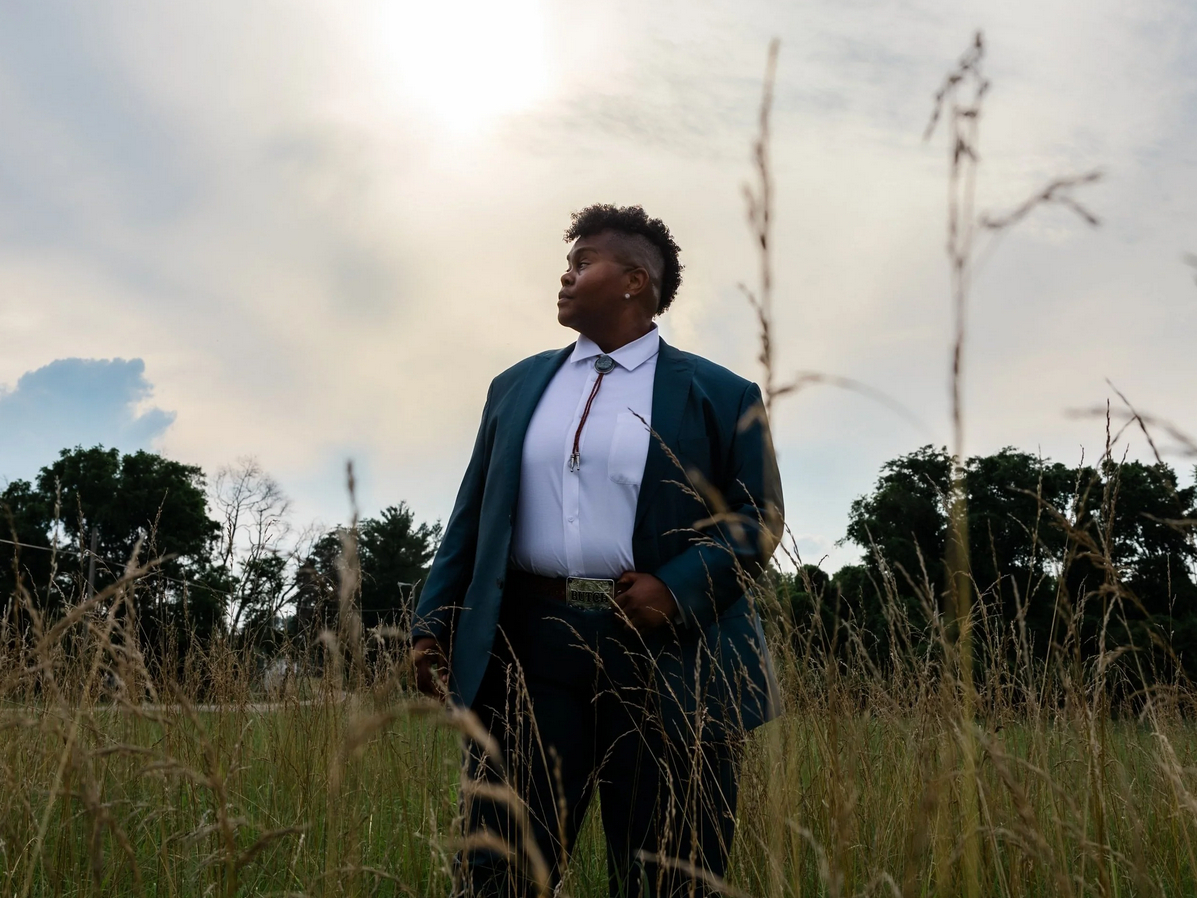
In February 2025, I saw the Black queer country artist Crys Matthews play a solo acoustic set at the Old Town School of Folk Music in Chicago, and her willingness to grapple with complex social issues stood in stark contrast to artists on country radio.
I first heard Matthews on WFMT Chicago’s folk music radio show, The Midnight Special, where the show played her song “Prodigal Son” during Pride Month in 2024. Matthews’ singing and songwriting are pointed and sincere, and a ticket to her show proved a worthy investment: she quickly became my most streamed artist in 2025.
One song especially stood out live for its message. “Cancel Culture,” just released on her 2025 album, Reclamation, takes a popular debate and reframes it around what’s actually worth canceling and responses to such tendencies.
The song is unusually thought-provoking because of our cultural moment. Matthews begins by singing, “There’s a whole lot in our culture I’d cancel if I could/ Instead of banning books, I’d ban gerrymandering for good.”
Matthews seems to accept the idea that cancel culture is real, but that it focuses on the wrong things. I’m willing to agree with that, but there’s one crucial caveat: cancel culture isn’t real.
That term is a giant misnomer. Nobody’s been canceled because of what gets called cancel culture, and it’s not a culture—it’s annoying, but it’s not dominating anything. It’s at most an internet subculture that deludes itself into thinking it works. If it worked, Donald Trump and ICE would have been canceled a long time ago, as would have Morgan Wallen and Dave Chappelle.
This brings up an important point: there is such a thing as institutional canceling, but it’s not the same. When Sinéad O’Connor tore up a picture of the Pope on Saturday Night Live in 1992, her career was effectively canceled–she was never close to being as commercially successful as she had been.
And whether country music fans condone it or not, the institutional canceling of the former Dixie Chicks in 2003 was real–and proved that sexism in the dominant culture of the U.S. has never gone away. Merle Haggard defended their stance against the War in Iraq and never received any of the backlash that they got, not to mention that he soon returned to the charts with a duet with Toby Keith.
Institutional canceling is alive and well, though we shall see if Trump’s attempts at canceling Stephen Colbert and others have the same impact as past instances. Once again, though, his judgments have more power than any online attempts at canceling him or his policies.
And therein lies the core issue. Canceling anyone or anything as an idea never has sufficient force without mass institutional power behind it.
Although in theory I’m against canceling anything, there are some people and institutions that I would love to see canceled. Donald Trump is a rich white man with no qualifications to be a world leader–none of his power was earned–who has raped and molested children. The problem is, the swarm of the internet still has nothing on Trump when it comes to institutional power.
Crys Matthews, it appears, would mostly agree. In “Cancel Culture,” she names things that should be canceled: book banning, the stigmatization of mental illness, telling boys to suppress emotions, and inaction “because it’s easier most days.”
The question becomes, what effective work can we do to combat injustice?
Keep reading when you sign up or sign in!