
What If We Don't?: Sapphic Imagery in Mainstream Country Music
Sapphic imagery is a recurring theme in mainstream country music these last few years -- but why? And what if we don't?
Keep queer country music community strong and sign up for our 600/500 Challenge!
We've got a representation problem in mainstream country music. That's nothing new, of course. But what if the problem is that there's...too many lesbians?
I shouldn't get ahead of myself, though. It's not that there's too many. It's what they're used for. In mainstream country music, queerness is still the Love That Dares Not Speak Its Name. But over the last few years, we've seen Sapphic imagery in a number of mainstream country outlets. I want to know why.
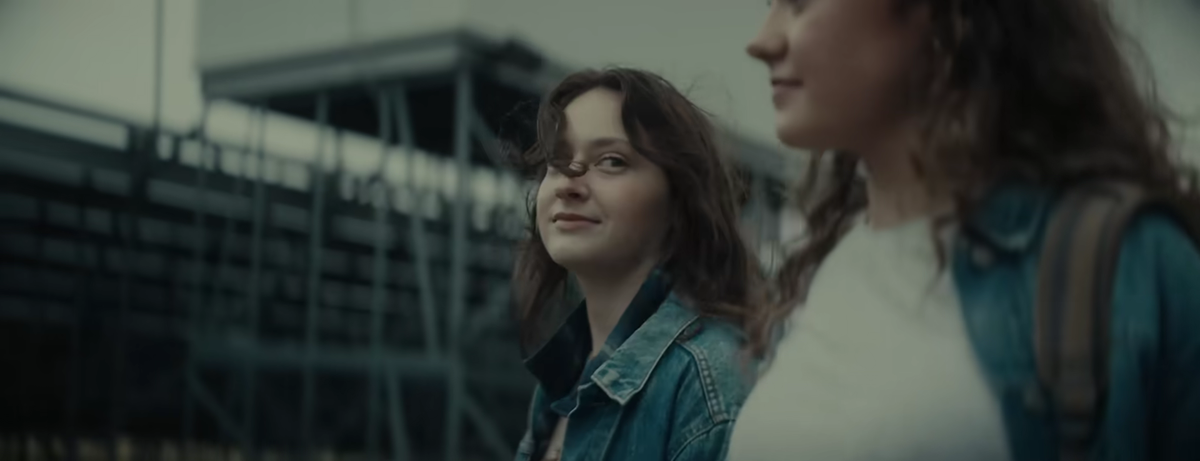
Most recently, and perhaps the biggest splash, is the queer teenage couple in Ashley McBryde's video for "What If We Don't?" If you haven't watched it yet, do it somewhere you can sniffle a little, because...woof.
The video begins with simulated EMDR lights, suggesting that it will surface a traumatic memory. In this case, a young girl with a guitar case meets up with a girl friend after school, by the bleachers. They giggle and hold hands, the girl with the guitar steals a glance (see above) while a downpour threatens – and then her friend waves goodbye and climbs into the car with her boyfriend. The protagonist hangs back regretfully to take care of something on her phone. When she pulls out of the school, she sees a series of police cars and ambulances flash by her – only to realize whom they're for.
The story is intercut with McBryde singing passionately at night next to those seem bleachers – drawing a line between herself and the girl with the guitar, that this is her painful memory. The song itself is about the dangers of staying silent about your feelings – because you never know when it'll be too late to confess your love for someone.
I am less interested in whether or not this is McBryde's "coming out," or the rumors that have been surrounded her. If she wanted to come out to her fans, she would. Instead, I want to think through what it is that McBryde is doing by making this a queer story in the first place.