
INTERVIEW: C.C. Trubiak Finds Home in Exile
In our interview, C.C. Trubiak shares his obvious passion for country music and the silver linings behind the story of his album Jukebox in Exile.
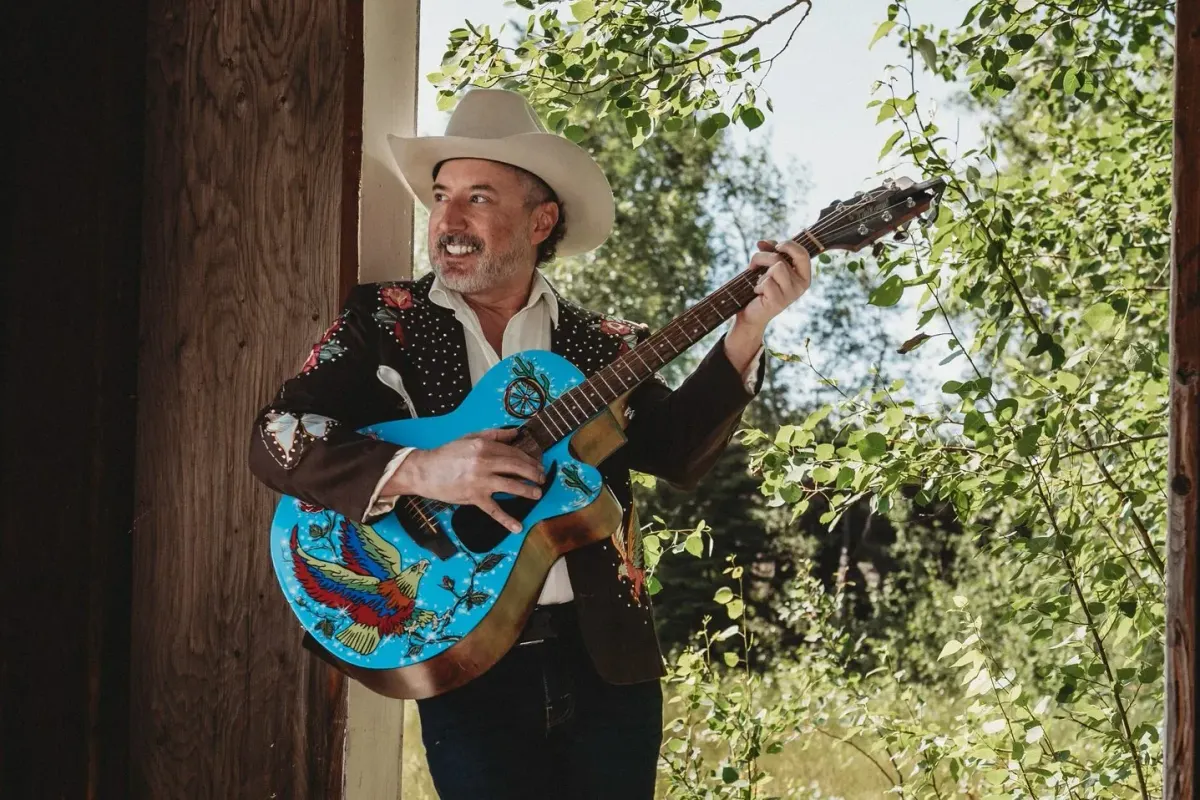
When he isn't working as a mental health counselor in rural Manitoba, CC Trubiak can be found strumming his guitar and pitching songs to the ghosts of country stars past. Trubiak's fourth album, Jukebox in Exile – out tomorrow – was crafted after a forced evacuation during the extreme wildfires in Northern Canada in 2025. Trubiak spoke about this a little bit in our premiere of the song "Being Rich," but in this interview, he goes deeper into his story and his obvious passion for all kinds of country.
Explain the title of your album.
The title Jukebox in Exile comes directly from the circumstances in which the album was written.
I've always loved classic country music and the world that exists inside those songs. On May 28, 2025, that world became a refuge for me. My hometown of Flin Flon, along with neighboring communities across northern Manitoba and Saskatchewan, was evacuated because of a major wildfire. My husband and I had only enough time to throw a few duffle bags in the truck, load up our cats, and leave. Like thousands of others, we didn't know when—or if—we'd be coming home.
What I thought would be a few days turned into a month-long evacuation. We eventually settled into a small Airbnb near Good Spirit Lake, Saskatchewan. I hadn't even brought my guitar. The shock, uncertainty, and anxiety of the situation were overwhelming, and I needed somewhere to put those feelings.
So I started walking.
Every day I'd take long walks through the surrounding countryside, and during those walks I began writing songs. At first, I wasn't even writing them for myself. I was imagining songs I might pitch to some of my country music heroes—artists like Conway Twitty, Loretta Lynn, Dolly Parton, George Jones, and Emmylou Harris. I carried a composition notebook for lyrics and used my phone's voice memo app to save melodies.
Songwriting became my escape. It gave me a way to transform fear, grief, uncertainty, and longing into stories. By the time we were finally allowed to return home, I had written twenty new songs.
The title Jukebox in Exile felt like the perfect description of that experience. The "jukebox" represents the country music community and traditions that have always comforted me, while the "exile" reflects the displacement that so many of us experienced during the evacuation. Together, they tell the story of finding solace, connection, and creativity in the middle of uncertainty.
Those songs became the foundation of the album, and ten of them ultimately found their way onto the record.
Does your album have an overarching theme?
The overarching theme of Jukebox in Exile is the search for home and connection, told through the lens of classic country storytelling.
The songs explore many different corners of love: devotion, heartbreak, grief, comfort, longing, and the ways people find their way back to one another. Some songs are about relationships that endure, while others are about learning to let go. Together, they reflect the emotional experiences that connect us all.
I've always been drawn to writing about the quiet moments rather than the dramatic ones. The moment you look into someone's eyes and recognize the weight they're carrying. The realization that a relationship has changed. The comfort of being understood without having to explain yourself. Those are the moments that often inspire my songs.
I also love the imagery and traditions of classic country music. Throughout the album you'll find barrooms, highways, hotel rooms, wheat fields, small towns, and front porches. I enjoy creating characters and settings that can carry deeply personal stories while still feeling universal. Country music has always been a genre where ordinary people and everyday experiences matter, and that's something I wanted to honor.
Another thread running through the album is the idea of home. Sometimes that means a physical place, but often it means something deeper: belonging, memory, community, or the feeling of being fully seen and accepted. Even though I'm not a particularly religious person, I found myself drawn to the language of homecomings, shepherding, grace, and return. Those ideas felt meaningful to me as metaphors for finding comfort and connection during difficult times.
At its heart, Jukebox in Exile is an album about love that endures, the lessons we learn from heartbreak, the importance of compassion, and the ways memory, music, and community help us find our way home.
How have you healed or grown your relationship to country music/Americana?
Country music has been part of my life for as long as I can remember. Some of my earliest memories are of listening to my dad's records and being captivated by artists like Olivia Newton-John. Songs like "Please Mr. Please," "If You Love Me (Let Me Know)," and "Let Me Be There" carried a warmth and sincerity that immediately connected with me. Even as a child, I was drawn to the storytelling and emotional honesty in country music.
That connection never really left. I grew up during the CMT era of the 1990s, but as I got older, my relationship with country music deepened. In my forties, I began seriously collecting vinyl records, and that opened up an entirely new world. What started as a hobby became an education. My collection now spans thousands of records across traditional country, bluegrass, country rock, gospel, countrypolitan, outlaw country, rockabilly, and more. During the pandemic, I even created a YouTube series called CC's Vinyl Closet to share some of that history and introduce people to artists and records they may never have encountered otherwise.
The older I get, the more I realize that what I love most about country music is sincerity. More than fame, trends, or image, I'm drawn to artists who tell the truth. Whether it's Dolly Parton, Waylon Jennings, Emmylou Harris, Skeeter Davis, or an overlooked artist who never became a household name, I'm always looking for that feeling of emotional honesty. I want to believe the person singing the song.
As a queer artist from a small and isolated mining community in northern Manitoba, there were also times when I wasn't sure where I fit within the genre. Growing up, the only openly queer country artist I really knew was kd lang. I loved country music deeply, but I didn't always see people who looked like me or shared my experiences represented within it. For a long time, that left me feeling a little on the outside looking in.
What has changed over the years is that I've come to understand that country music is bigger than the stereotypes people sometimes attach to it. At its best, it's a genre about ordinary people, complicated lives, love, loss, resilience, and community. Those stories belong to all of us. Seeing more queer artists finding space in country music has been encouraging, but I've also learned that I don't need permission to belong here. The music has been part of my life for too long, and its stories have shaped me too deeply.
Country music feels as natural to me as breathing. The more I've explored its history and traditions, the more at home I've felt within it.
How do you feel your queer identity ties into your performance style or music?
My queer identity has influenced my music and performance style primarily through authenticity. Growing up, I spent a lot of time hiding parts of myself. By the time I was twelve, that struggle had contributed to a severe depression and a suicide attempt that became a major turning point in my life. From that point forward, I began a long journey of healing, self-discovery, and learning how to live more honestly.
As a teenager, I embraced my femininity through my appearance, my clothing, and the way I moved through the world. Over time my style evolved, but the underlying lesson remained the same: people connected with me most when I was simply being myself. That realization has shaped everything I do as an artist.
When I step on stage today, whether I'm wearing a rhinestone jacket or singing one of my original songs, I'm not trying to be anyone other than who I am. I think audiences respond to honesty. They respond to someone who genuinely means the words they're singing.
What matters most to me isn't impressing people. It's creating connection. Some of my favorite moments happen after a show when someone tells me a song reminded them of a loved one, or brought back a memory, or made them cry. Those moments remind me why music matters in the first place.
As a queer country artist, I didn't always see people like myself reflected in the genre. For a long time I wondered whether I truly belonged. Today, I see my presence on stage as a reminder that country music is big enough to hold many different stories and experiences. The more comfortable I've become in my own skin, the more honest I've become as a songwriter and performer.
Ultimately, I hope people leave my shows feeling welcomed, understood, and a little less alone. That's the kind of space I always needed, and it's the kind of space I try to create through my music.
What's the best way a fan can support you?
The best way a fan can support me is simply by staying connected.
As an independent artist, especially one living in a small northern Manitoba community, those moments of connection mean more than people often realize. I work full-time as a mental health counselor, and my music exists because I make space for it in the evenings, on weekends, and in the quiet moments in between. There have been times in my life when I felt very alone—being queer, loving country music, and living in a place where I didn't always see myself reflected in the culture around me.
That's why it means so much when someone takes the time to reach out and say that a song resonated with them, reminded them of someone they love, or helped them through a difficult day. Whether it's a conversation after a show, a message on social media, or someone sharing a song with a friend, those moments provide encouragement that lasts far longer than people might imagine.
Some of the most meaningful support I've received has come from people who simply showed up—whether that was at a performance, a community fundraiser, a listening party, or through a thoughtful message online. Those connections remind me that music is ultimately about bringing people together.
If someone enjoys my music, I'd encourage them to keep listening, come to a show if they can, share the songs with someone who might connect with them, and stay part of the conversation. Independent artists grow one relationship at a time, and every genuine connection helps keep the music alive.
At the end of the day, that's what country music has always been about for me: people showing up for one another and sharing stories that help us feel a little less alone.
Jukebox in Exile is out tomorrow, June 5. Pre-save it here.